

Mountain Goats Are Making Summer Appearances In Utah’s Mountains
If you’re planning to hike or backpack in Utah’s high-elevation mountain ranges this summer, you might encounter a mountain goat. With around 1,500 mountain goats across the state, these animals are common in rugged alpine terrain, especially in the Uinta Mountains, the Tushar Mountains near Beaver, and scattered areas of the Wasatch Range, including Mount Timpanogos and Little Cottonwood Canyon.
“Mountain goats are really adapted to snowy weather and high-elevation conditions,” Rusty Robinson, the Utah Division of Wildlife Resources Once-In-A-Lifetime Species Coordinator, said in a press release. “As part of that adaptation, mountain goats don’t have hard hooves like other big game animals. Their hooves are more rubbery, which helps them grip the rocks when they are climbing a steep cliffside. They also grow really long, thick hair in the winter, and then shed it in the spring when the weather warms up.”
Read More: Mountain Lions More Visible During Summer Months
Mountain goats eat grasses, flowering plants, shrubs, and mossy lichen. While they don’t migrate long distances, they may move to slightly lower elevations during harsh winter conditions. During the summer, hikers are most likely to encounter nanny goats and their kids grazing in lower-elevation meadows, where food is more plentiful.
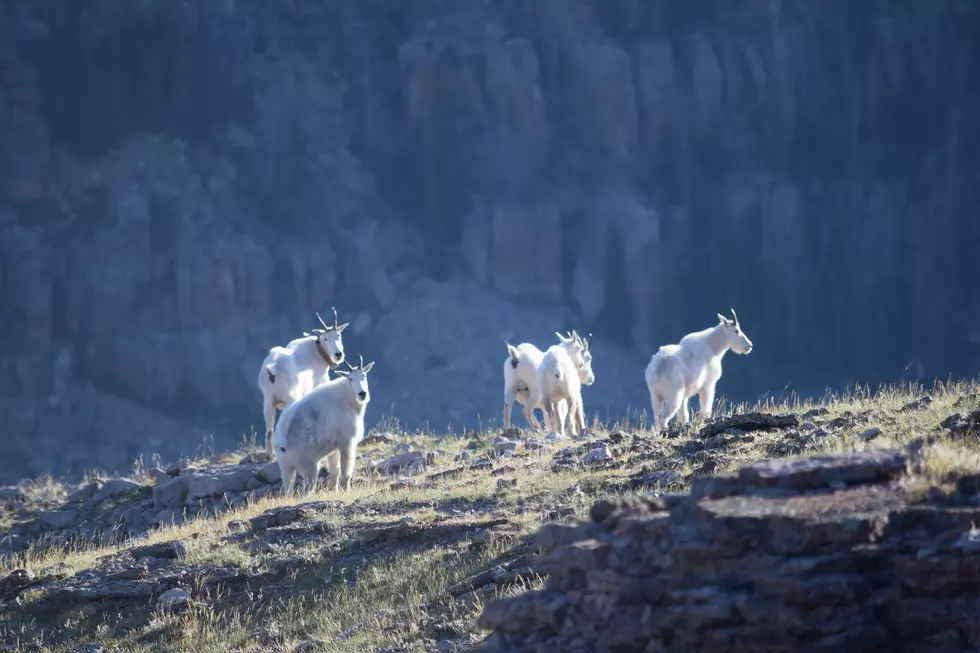
“Mountain goats are one of the few local big game species where both the males and females grow horns, so it’s hard to tell them apart,” Robinson said. “However, the female goats (nannies) have a thinner horn at the base and typically have a bigger gap between their horns. The male goats (billies) are also typically larger in size.”
The Female Mountain Goats Are Especially Territorial
Nanny goats become especially territorial when raising their young, typically born in late May. Male goats grow more aggressive during their breeding season in November. To stay safe, hikers should give mountain goats at least 150 feet of space and keep dogs leashed, as goats can be aggressive toward pets.

If a goat approaches, back away slowly. If it keeps coming, wave your arms and make loud noises to scare it off. “Mountain goats can impale you with their horns, so you don’t want to risk coming into contact with one,” Robinson said. “Be aware of your surroundings, stay alert and don’t put yourself in those situations.”

For more information, visit the Wild Aware Utah website.
LOOK: Most commonly seen birds in Utah
Gallery Credit: Stacker

